By R. L. Harvey
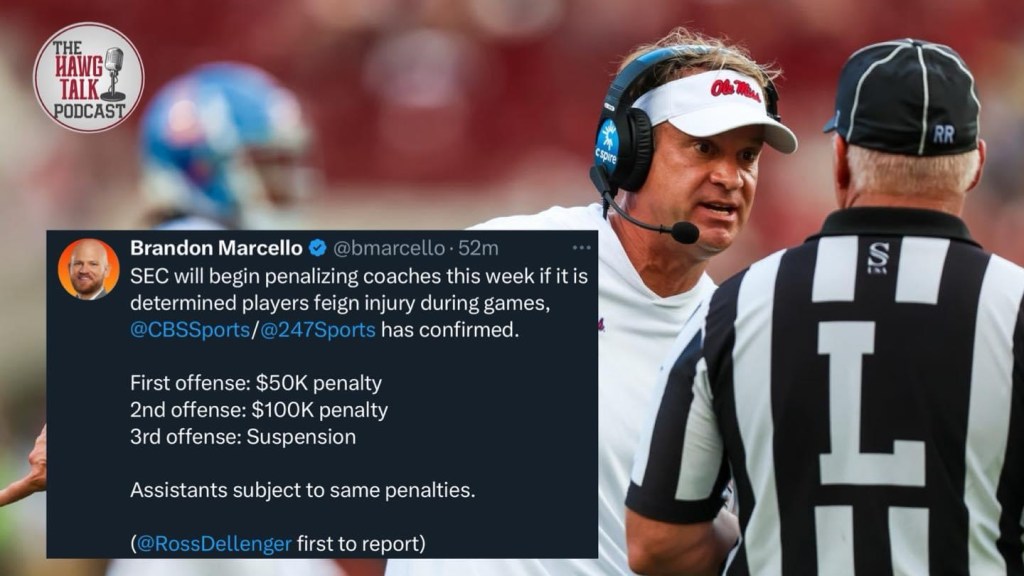
College football is renowned for its intense action, passionate fans, and the high stakes for players and coaches alike. However, an increasingly problematic trend has emerged: players feigning injuries to manipulate the game’s pace. It’s a tactic that not only disrupts the flow but also raises questions about sportsmanship. Recently, the SEC announced a new policy to address this issue, but does it go far enough?
The SEC’s latest rule introduces significant penalties for coaches if their players are found feigning injuries. The first offense results in a $50,000 penalty, the second in a $100,000 penalty, and the third leads to suspension. Assistant coaches are also subject to the same penalties. While this approach aims to hold coaching staff accountable, it may not directly impact the players and the game’s integrity.
Rather than focusing on financial and administrative penalties, a more effective approach might involve in-game consequences for players. Here’s a proposal that keeps the punishment within the gameplay, ensuring immediate fairness and integrity:
If a player is deemed to have feigned an injury, they should sit out the next two series. This immediate impact can deter players from using such tactics, as it directly affects their participation.
If the feigned injury occurs near the end of the game, the player should sit out the first two series of the next game. This ensures that the consequence is felt and discourages last-minute antics.
To further ensure fairness, additional penalties should be in place if coaches send in subpar players to feign injuries, thinking it won’t matter. If caught, these coaches should face escalating game suspensions and fines, making it clear that manipulating game integrity won’t be tolerated, no matter who is involved.
This approach focuses on maintaining the integrity of the game. By implementing immediate, game-centric consequences, it becomes clear that feigning injuries will directly affect the players’ involvement in the match. This not only preserves the spirit of the game but also adds a layer of accountability on the field.
Feigning injuries has no place in college football, a sport that thrives on authenticity and fair play. While the SEC’s new policy is a step in the right direction, implementing in-game penalties for players can provide a more immediate and impactful solution. Let’s ensure that college football remains a game of skill, strategy, and true sportsmanship.
 Arklahoma Sports