All the Signs Are There for Economic Collapse
By Rolph Lundgren
November 5, 2024 no doubt is a huge day for the United States of America. Hopefully we will know on that same day who will be our next president.
Keep your eye on the Fed and the banks. Defaults on loans, and the excessive printing of money, along with major economic moves being made by billionaires such as Warren Buffett, who has just sold almost a billion dollars in shares. He didn’t just do this because he was bored.
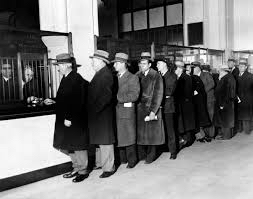
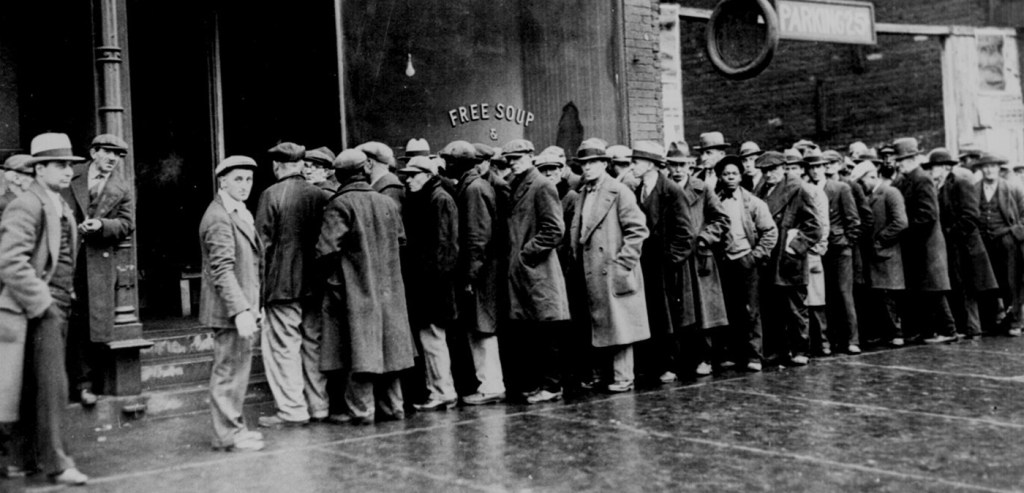
Let’s take a look at our history. The United States has historically experienced economic crises, including panics, recessions, or depressions, at 5-20 year intervals. The current national debt, amplified by Federal Reserve decisions, suggests a looming crisis by 2030, regardless of who is president. The principal challenges lie within the US Congress and the pervasive influence of lobbyists, requiring a comprehensive reform to remove entrenched politicians. Listed are what we’ve faced since our country’s founding.
- Panic of 1797 – Caused by deflation and a credit crunch.
- Panic of 1819 – The first major peacetime financial crisis in the U.S., leading to widespread foreclosures, bank failures, and unemployment.
- Panic of 1837 – Triggered by speculative lending practices, bank failures, and a collapse in land prices.
- Panic of 1857 – Caused by the declining international economy and over-expansion of the domestic economy.
- Panic of 1873 – Resulted from over-speculation in railroads and a drop in European demand for American farm products.
- Panic of 1893 – Triggered by the collapse of railroad overbuilding and shaky railroad financing.
- Panic of 1907 – Caused by a failed attempt to corner the market on copper, leading to bank runs.
- Great Depression (1929-1939) – The most severe economic downturn in U.S. history, triggered by the stock market crash of 1929.
- Recession of 1945 – Post-World War II economic adjustment.
- Recession of 1949 – Caused by a decline in government spending after WWII.
- Recession of 1953 – Triggered by the end of the Korean War.
- Recession of 1958 – Caused by monetary policy tightening.
- Recession of 1960-1961 – Triggered by a decline in industrial production.
- Recession of 1969-1970 – Caused by monetary tightening to control inflation.
- Recession of 1973-1975 – Triggered by the oil crisis and stock market crash.
- Recession of 1980 – Caused by tight monetary policy to control inflation.
- Recession of 1981-1982 – Triggered by high interest rates to combat inflation.
- Early 1990s recession – Caused by restrictive monetary policy and the savings and loan crisis.
- Early 2000s recession – Triggered by the dot-com bubble burst.
- Great Recession (2007-2009) – Caused by the housing bubble burst and financial crisis.
- COVID-19 Recession (2020) – Triggered by the global pandemic and resulting lockdowns.
- 2024 or 2025? Maybe as late as 2029.
The recent surge in gold investment is driven by economic uncertainty, inflation concerns, and central bank activities. Investors view gold as a safe-haven asset during volatile times, and with inflation rates remaining high, gold serves as a hedge to preserve purchasing power. Additionally, central banks, particularly in countries like China, have been increasing their gold reserves, further supporting gold prices and signaling confidence in its stability.

Lowering interest rates also play a significant role in boosting gold demand. When interest rates fall, the opportunity cost of holding non-interest-bearing assets like gold decreases, making it more attractive compared to bonds and savings accounts. This shift can lead to higher demand and prices for gold. As borrowing costs drop and consumer spending potentially increases, the demand for gold-related goods like jewelry and electronics may also rise, further supporting the commodity’s price growth.
The devaluation of the US dollar occurs when its value declines relative to other currencies. This can result from various factors, including the Federal Reserve’s monetary policies, such as lowering interest rates or quantitative easing, which make US assets less attractive to investors. High inflation also plays a role, as it erodes the dollar’s purchasing power, making it less valuable compared to other currencies. Additionally, persistent trade deficits increase the supply of dollars in the global market, putting downward pressure on its value.
Geopolitical factors can also contribute to the dollar’s devaluation. Instability or shifts in global economic power can lead to a loss of confidence in the dollar, prompting investors to seek safer or more stable currencies. While these factors can weaken the dollar, it’s important to remember that currency values fluctuate due to a complex interplay of economic and political influences. The current interest in gold and other safe-haven assets reflects broader concerns about economic stability and inflation.

Despite the challenges posed by economic uncertainties and the devaluation of the US dollar, history has shown that both individuals and economies have a remarkable capacity for resilience and recovery. By staying informed, making prudent financial decisions, and diversifying investments, people can navigate these turbulent times. Moreover, innovation and adaptability often emerge strongest during periods of adversity, paving the way for new opportunities and growth. Remember, every economic downturn has eventually given way to recovery and prosperity, and this time will be no different.
Look for several false flags between now and Election Day. Don’t be surprised if somehow some way Kamala Harris becomes president to finish out Joe Biden’s term. Look for signs of ofd things happening and use your best judgement but make sure to do your due diligence to know what is really going on in the global economy.
Some call it a new world order while others call it a one world order. Regardless the unelected bureaucrats of the world are trying to eliminate borders and it all starts with the United States of America.

Make sure you vote, regardless of whom you vote for, but really study the policies that will help guide you to the correct decision and leave the emotions out of it. There’s no joy in a depression.
 Arklahoma Sports